























Bryan Johnson's Workout Protocol
Written by Bryan Johnson • 10.14.2026
Here is the good news: 11 min of daily exercise is linked to a 23% lower risk of early death.
A small, daily exercise habit will produce meaningful health benefits.
If you’re in a chapter of life where exercising is hard, I get it.
I remember when I had 3 children below the age of 7, was sleep deprived, and was building a start up. Finding even 10 min of uninterrupted time felt impossible and when that opening arrived, all I wanted to do was sleep.
In this blog post:
- ground rules
- what I do
- sample 7-day routine
- pre- and post-workout nutrition

Ground rules
No single exercise is best. A mix is best.
Each week, focus on 4 big categories:
- Strength training
- Low-intensity cardio (zone 2 heart rate)
- High-intensity cardio (zone 4 or 5)
- Mobility, flexibility, and balance
Some rules to follow:
- overall, aim for consistency: It’s more important that you make exercise a habit than go all out once a month. Even 10 minutes a day is a big win.
- aim for 2-3 strength training sessions a week: Focus on compound movements, such as squats, deadlifts, and lunges, to work a variety of muscles. If three is too much, even fitting in one makes you a star.
- progressive overload is key: Gradually increase the difficulty of strength training over time, increasing the weight you lift or the number of reps you do. Being consistent is also going to get you a long way.
- HIIT is the best ROI for your time: 4-6 reps of 30-second all-out efforts with rest in between, 3 times a week, can match the cardiovascular gains of 5 weekly sessions of 40-60 min of steady cardio. Cardiorespiratory fitness is one of the strongest predictors of how long you live. If time is tight, intervals are the best trade you can make.
- avoid high-intensity exercise 4 hours before bed: Research shows it can reduce sleep quality and recovery.
- just do it: Don’t get caught up in all the nuances and rabbit holes of exercise. Being active, in whatever ways you can, pays big dividends for your health.
What I do
Every day, I do a mixture of strength, cardio, balance, and flexibility.
I aim for:
- at least 150 min of zone 2 cardio a week
- at least 75 min of high-intensity cardio a week (~10 min of that is near-max effort)
- mobility, flexibility, and balance training every day
Sample weekly workout routine
You could do some strength training and cardio every day. Or spread it out throughout the week. Do what works for you.
This gives you an idea of what a week of workouts can look like…
Monday: Strength training and moderate cardio
An example workout.
Duration: ~60 min
The workout:
- 5 min general warm-up: cycling, walking, etc.
- 5 min dynamic warm-up: arm circles, leg swings, high knees, lateral lunges, etc.
- 20 min strength training:
- squats (weights held at either side or near chest for goblet stance) 3x10-15
- push-ups (standard if possible or on knees/wall) 3x8-12
- single-arm dumbbell rows 3x10-12
- kettlebell swings and/or farmer’s walks 3x30 seconds
- planks 3x20-30 seconds
- 5-10 min stability work: single-leg balance, bird dog, single-leg RDL, single-leg toe touch, plank with shoulder taps, dead bugs
- 25 min moderate-intensity cardio: brisk walking, jogging, cycling, swimming, elliptical, etc.

Tuesday: High-intensity interval training (HIIT) and moderate cardio
Duration: ~10 min
The workout:
- 8 rounds: 20 seconds all-out effort, 20 seconds rest or very low intensity (40 seconds rest if you’re a beginner)
- do this running, cycling, or with bodyweight exercises
- total time ~5 min
- use the remaining time for moderate-intensity cardio
During moderate-intensity cardio, aim to keep your heart rate between 60-70% of your max, a level where you can maintain a conversation but still feel like you’re exerting yourself.
Wednesday: Strength, flexibility, balance, and mobility training
Duration: 60 min
The workout:
- 10 min dynamic stretching: arm circles, wall slides, thread the needle, hip rotations, etc.
- 30 min strength training: focus on compound movements targeting areas that are not sore from Monday
- 15 min yoga poses: focus on balance and flexibility with cat-cow stretch, cobbler’s pose, tree pose, cobra pose, etc.
- 5 min static stretching: cooldown
Thursday: HIIT: Norwegian 4x4
Duration: ~40 min
The workout:
- 10 min warm-up: easy jog, cycle, or row, building to a light sweat
- 4 rounds of:
- 4 min hard: push to about 85-95% of your max heart rate (zone 4-5). By the last minute you should be breathing hard and unable to hold a conversation.
- 3 min easy: slow to a walk or light spin at zone 2, and let your heart rate settle before the next round.
- 5 min cooldown: easy pace, then a few static stretches
Do it on anything that raises your heart rate and is kind to your joints: cycling, rowing, incline treadmill walking, or a stair climber.
A few pointers:
- the hard 4 min should feel uncomfortable but controlled, not an all-out sprint. Pace it so your fourth interval is as strong as your first.
- if four rounds is too much at first, start with two or three and build up.
- keep this session at least 4 hours before bed so it doesn't cut into your sleep.
Friday: Strength training
Duration: 45-60 min
The workout:
- 5 min general warm-up
- 5 min dynamic warm-up
- strength training:
- lunges (with dumbbells or bodyweight) 3x10
- overhead press 3x10
- dumbbell chest press 3x10
- side plank hold 20-30 seconds each side
- step-ups 3x10 each leg
- 5-10 min stability work
Saturday: Play with friends
Hiking, biking, swimming, pickleball (be careful), basketball…
Sunday: Active recovery
Duration: 35-50 min
The workout:
- 20-30 min gentle yoga or stretching with additional mobility work
- 15-20 min of mindfulness meditation

Nutrition tips
Food is fuel. Use it to power your workouts and recover properly.
Tips:
- before: Eat 1-2 hours before exercise. Go for complex carbs and some protein.
- after: Eat complex carbs and protein to refuel and repair muscles. Ideally within 1 hour.
This is what I do:
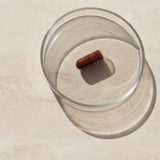
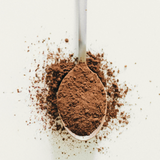
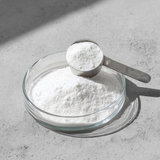
Pre workout, I have an 8-oz drink with:
I eat Longevity Protein with:
I then exercise.
Post workout, I eat a meal with veggies, legumes, extra virgin olive oil, berries, nuts, and seeds.
Remember: Even 11 min of exercise a day can support longevity. You’ve got this.


