Longevity News Blog

Jump To

Test Your Biological Age for $0

Test Your Biological Age for $0

Link to downloadable PDF instructions How to test Follow the video for instructions Do each test Fill in your scores and ‘bioage/ranking’ on this chart.   1. Continuous Push-Ups Objective: Measure upper body strength and muscular endurance.Evidence: Associated with lower risk of cardiovascular disease.¹Target: Be ‘good’ or above for your age and gender Instructions:a) Lie face down on the floor with hands placed slightly wider than shoulder-width apart, elbows fully extended.b) Lower your body until the chest touches the floor, keeping the body in a straight line from head to heels. Keep an eye out for rounded backs (hips in the air).c) Push back up to the starting position. This counts as one push-up.d) Perform as many push-ups as you can without rest (considered to be holding at the top for more than 3 seconds), maintaining proper form.e) Record the number of push-ups completed. Equipment needed: noneMeasurement: Count (no units), greater number is better   2. Mobility Test: Sit Rise Test Objective: Assess flexibility, strength, and balance.Evidence: Predictor of all-cause mortality.² Instructions:a) From a standing position, sit down on the floor with legs crossed, without using hands, knees, forearms, or side of the legs for support.b) Rise back to a standing position without using any support (this is the goal).c) If support is needed, the scoring is as follows:i) Deduct 1 point for each hand, knee, or forearm used going down and upii) Deduct 0.5 points for unsteady executiond) The maximum score is 10. A score of 8 or more is considered ideal. Clarification notes: non-slippery flat surface, barefoot. It’s also a skill, so it’s ok to redo this a few times.Equipment needed: noneMeasurement: Count (no units), 10 is a perfect score, greater number is betterTarget: You want to get as high a score as you can - if you’re younger than 45, less than 8 puts you in the bottom 25% of the population.   3. Sit and Reach (YMCA) Objective: Measure flexibility of the lower back and hamstrings.Evidence: Flexibility plays a key role in health related fitness: injury prevention, risk of falling, postural deviationsTarget: You want to get as high a score as possible – aiming for at least ‘above average’ according to this chart (point to side of screen). Instructions:a) Sit on the floor with legs extended straight out in front of you. Using a tape, measure around a 10–12 inches of distance between your feet, with the tape being beneath your extended heel. Mark with tape.b) This is easier to do with no shoes on.c) Then use the tape measure at the 15” mark between the ~5–6 inch mark of the first tape marking (think like you’re making a “T” or a “+” with both tape measures) – the zero should be closest to the person. Heels should be resting on the masking tape.d) Instruct them to place one hand on top of the other, palms facing down, and reach forward as far as possible along the measuring line.e) Ensure you hold the stretch for 1–2 seconds.f) Measure the distance reached by the fingertips.g) Repeat twice and record the best distance. Equipment needed: yard stick, tape with sharpie to mark feet location on floorMeasurement: Distance (inches / in), larger number is better     4. One-Leg Stand / Balance Test Objective: Measure balance and lower body strength.Evidence: Successful 10-second one-legged stance performance predicts survival in middle-aged and older individuals (aged 41 and above). Inability to perform a 5-second OLS is a predictor of injurious falls. To perform a 10-second OLS test is associated with a lower all-cause mortality risk.Target: varies by age and gender Instructions:a) Stand with eyes shut and on one leg with the other leg bent at the knee and lifted off the ground and free floating.b) Hold this position as long as possible without touching the raised leg to the ground, using external support, or touching your other leg.c) Record the time you can hold the position in seconds.d) Perform the test on both legs and record the times. Clarification notes: do this barefoot, keep elbows extended, the arms naturally placed close to your body. This particular study allowed for 3 attemptsEquipment needed: timerMeasurement: Time (seconds), longer time is better   5. Reaction Time Test Objective: Measure quickness of response to a stimulus.Evidence: Reaction times become slower with age, increase with task complexity, and are more pronounced in women than in men. One study found that slower and more variable reaction times were linked to an increased risk of all-cause and cardiovascular disease mortality. Instructions:a) Download the App “Reaction Time & Reflex Test.” Click on the Game “Lights Out”b) Start a new test.c) Place your thumb or finger on the screen to start the countdown. All 5 lights will illuminate. As soon as the lights turn out pull your finger or thumb off the screen.d) Repeat 5 times and take the best score of the 5 tests. This will be the lowest number. Equipment needed: Free app downloaded and installedMeasurement: Time (seconds / sec), smaller time is betterGoal: achieve a faster-than-average reaction time for your age/gender.   6. Waist-to-Height Ratio Disclaimer: Not indicative of ‘biological age’, it’s more a general indicator of visceral fat + general body composition. This will affect your longevity.Objective: Measures your height and your waist, then gives a ratio. Lets you assess body fat distribution, metabolic health and risk.Evidence: Waist-to-height ratio is more predictive of years of life lost than BMI, as it is a proxy for measuring central (visceral) adipose tissue, which is more strongly associated with health risks than total body fat.Target: A ratio of less than 0.5 (or in the green area) is considered healthy. Instructions:a) With shoes off, use a tape measure or marking on a wall to measure your height in centimeters (cm).b) Measure your waist circumference at the narrowest point between the ribs and the hips in centimetres, pulling up your top.c) Clarification notes: do not “suck in” your stomach. You should be in a relaxed state during this measurement.d) Calculate the ratio: Waist Circumference (cm) / Height (cm). Equipment needed: measuring tape, calculatorMeasurement: Ratio (no units), smaller is better   7. [BONUS]. Grip Strength Objective: Assess hand and forearm strength.Evidence: Strongly linked to lower mortality and cardiovascular disease.³ Instructions:a) Use a grip strength dynamometer – costs about $20 on Amazon.b) Stand upright and hold the dynamometer at your side.c) Squeeze the dynamometer as hard as you can.d) Record the highest reading in lb after 3 attempts in each handi) The graph we have included is in pounds, not kg Equipment needed: dynamometerMeasurement: Force (pounds / lb), larger number is betterTarget: Aim for a ‘strong’ grip strength for your age            
Dad bod is real
How to get 100% sleep score while flying

How to get 100% sleep score whil...

View this post on Instagram A post shared by Kate Tolo (@katetolo)
The Three Power Laws of Health

The Three Power Laws of Health

Hi Friend, Today is World Health Day.I want to share something simple, but powerful: the 3 Power Laws of health. If you do these three things, you will:  Have more energy. Think more clearly.Sleep better. Let’s begin. Power Law 1: Sleep Reframe your identity.You are no longer someone who tries to get better sleep.You are a professional sleeper. That means you don’t sleep when it’s convenient. You don’t sleep after your show ends, or after finishing up some late-night emails, or after one more scroll through social media. Treat sleep as a craft, something you continually improve. It’s the foundation of every other part of your life. If you get your sleep right, everything else becomes easier. Here are 5 things to do immediately: 1. Eat earlier. Eat lighter.If your bedtime is 10 p.m., have your last meal by 8 p.m. Then push it to 7. Then try 6. Then 5. Find what works for you.You will quickly learn: the earlier and lighter you eat, the better you'll sleep. 2. Build a wind-down routine.Your body can’t go from hyper-focused work or buzzing social energy straight into sleep mode. It needs a transitional wind down phase. One hour before bed, shift your state. Screens off. No scrolling.Turn to breathwork, meditation, reading, stretching, or a walk. You’re sending your nervous system a signal: it’s time to slow down. 3. Adjust your lighting. Bright white lights signal alertness.If you want to fall asleep fast, switch to red light in the evening.I’ve replaced lamps in my house with red bulbs. They’re incredibly effective. The mood calms. Everyone winds down. 4. Stick to your bedtime.Routine is everything.If your bedtime is 10 p.m., aim to go to bed within 30 minutes of that every night. Deviate, and your body gets confused. Sleep quality suffers.Even with the same number of hours, inconsistent timing reduces sleep efficiency and recovery. 5. Avoid stimulants.This one is obvious but easy to overlook.If you're going to bed at 10 p.m., be mindful of your caffeine intake. Caffeine has a half-life of ~6 hours. A cup of coffee at 4 pm means that half a cup of coffee is in your system at 10 pm. Don’t let a badly timed coffee ruin your night. Power Law 2: Exercise When you sleep well, you feel well.When you feel well, you move well. And when you move, you feel even better. That’s the loop we’re building. Start here: Move your body for 30 minutes a day. This could be walking, running, swimming, strength training, biking. Anything that gets your heart rate up. Break up your day with movement. Every 20 - 30 minutes, get up. I do this constantly: stretch, take a few steps, reset. Moving your body throughout the day is just as important as your structured workouts. From here, you can go deeper. There’s an infinite rabbit hole of protocols, programs, and progressions.But the basics are the basics: Be active every day. Move every hour or so. Your body craves movement. Give it what it needs. Power Law 3: Diet Now, this one’s complicated. Because food is emotional.We use it to self-soothe.We use it to celebrate.We use it when we feel stuck. I know this firsthand. I was trapped. If you're struggling here, I see you. That’s why diet is Power Law #3, not #1. When you're well-rested and moving, you naturally want to eat better.If you're sleep-deprived and sedentary, your cravings take over. So here’s the truth: 1. Never rely on willpower. If there’s a time of day you always cave, for example, 7 p.m. that may include cookies or other late-night snacks, you can use a system for strength instead of willpower. Don’t wait until you're in the danger zone to decide. Decide ahead of time.You’re someone who doesn’t eat cookies at 7 p.m. Period. Make it a rule. Not a debate.2. Fire your worst self.For me, it was Evening Bryan.From 5 p.m. to 10 p.m., he was guaranteed to overeat. Every single day.So I fired him.I made a rule: no food after 5 p.m.It wasn’t about self-control. It was about self-preservation.You might not need that exact rule. But you probably know which version of you needs to be fired.3. Eat the Don’t Die Food Guide..Healthy fats. Quality proteins. Lots of plants. It’s not about being perfect. It’s about being directionally correct, consistently. Follow the Don’t Die Food Guide here.4. Avoid the obvious traps.Too much sugar. Too much alcohol. Smoking. You know what they are.You don’t need me to tell you. But you do need to decide where your standards are. And stick to them. We live in a world where personal health is insanely hard. I know; I’ve felt hopeless and helpless too. But now, I have systems. If you’re reading this right now, eating junk food, feeling off track, that’s okay.You’re here. You’re trying. That’s what matters. We’re building a community for a new societal norm of health.Where being healthy is normal.Where we support each other in the micro-moments. So when you’re about to give in, don’t just think about yourself. Do it for everyone else. Because when you make the right choice, others will too. And when you cave, we all feel it. Final word:You don’t need to be perfect. You need to be committed. These 3 Power Laws are your foundation.Master them, and you’ll become the happiest, healthiest version of yourself. Then we can start playing with all the cool stuff on top. But first:Don’t do it. I’m telling you. Don’t cave. Not tonight. Be well,Bryan
My NEW Morning Routine

My NEW Morning Routine

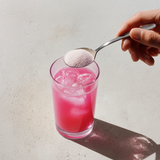
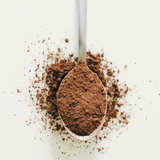
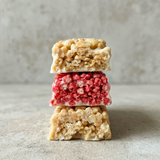
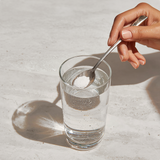
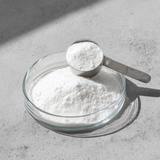
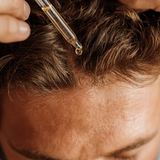
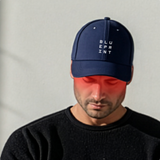
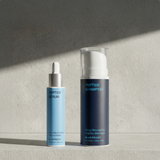
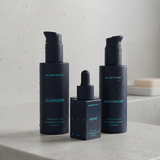
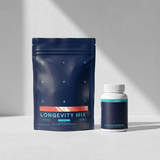
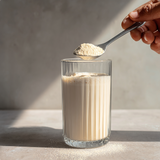
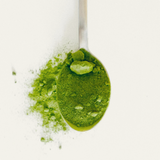
Hi Friend,Every morning, for the past two and a half years, I have followed a routine that’s been measured, refined, and optimized down to the smallest detail.We are pushing the frontiers of health and sharing it all with you. Here’s what that looks like in 2025:1. Wake Up~5:00 AM - I wake up naturally – no jarring alarms, as abrupt wake-ups can have negative effects on the body.2. Tracking My Core TemperatureFirst, I check my inner ear temperature. Most people sit around 98.7°F. I run significantly cooler – around 94°F (34.4C) – due to my health protocols. My metabolism has become more efficient. To put this into context, to achieve a similar body temperature (94°F), one would need to swim in ice for a mile. Checking my morning body temperature allows me to assess if anything is amiss. If my temperature is higher than normal, it may mean something is up. Females, your cycle will have your body temperature changing in predictable patterns. 3. Body Composition Check I take a quick body measurement using a Withings scale ($99 or $199) to track: Weight Fat Muscle Hydration Arterial stiffness 4. Breathing & Light Exposure To get my mind and body ready for the day: I do a 5-minute breathing exercise or meditation. Since I wake up before sunrise, I use a 10,000-lux light for 3–4 minutes to simulate natural morning light, helping regulate my circadian rhythm. 5. Hair & Scalp Routine I apply an Rx hair serum (Blueprint designed, out in June) and massage my scalp with a silicone scrubber for 1–2 minutes to improve blood flow. Then, I wear a red light therapy cap (Blueprint will have one in June) for 6 minutes to support hair growth while continuing my routine. 6. Hydration & Supplementation At 5:25 AM, I drink an 8 oz (236 mL) mix designed to support longevity: 1 scoop of Blueprint Longevity Mix 11g Blueprint Blueprint Collagen Protein 2.5g Blueprint Creatine (Longevity Mix already has 2.5g, totaling 5g) ½ tsp Prebiotic Galactooligosaccharides 1 tsp Inulin It’s comforting to know that the nutrition and supplements I get from Blueprint is 3rd party tested.  7. Exercise & MovementAt 5:30 AM, I train for 60–90 minutes, focusing on balance, flexibility, strength training, and cardio. My workouts include a mix of high-intensity intervals, resistance training, and functional movement. On weekends, I hike, play pickleball, ride a bike, climb, or do other outdoor activities. I rotate between listening to music, books, podcasts, or educational videos while training. 8. Breakfast & Supplement Routine At 6:45 AM, I have my first meal: Blueprint Protein (watch how I prepare it) with: 1 scoop of Blueprint Blueberry Nut Mix 11g Blueprint Collagen Protein 1 Tbsp Blueprint Extra Virgin Olive Oil 6g Blueprint Cocoa I also take my morning supplements: Blueprint Essential Capsules - 2 Blueprint Softgel - 1 Blueprint NAC + Ginger + Curcumin - 3 Blueprint Red Yeast Rice + Odor-Free Garlic - 1 EPA/DHA/DPA 800mg ProButyrate 600mg Proferrin 10.5mg NR (450mg) or NMN (500mg) Acarbose 200mg (Rx) Metformin (500mg) (Rx) While eating, I continue listening to a book, podcast, or educational video to make the most of my time. 9. Skin & Hygiene RoutineAt 7:15 AM, I follow my skincare and hygiene protocol: Face Care: Gentle cleanse, barrier strengthening serum, vitamin C, moisturizer. Sun Protection: Apply sunscreen if going outside when UV index is higher than 3 Shower Routine: Use body wash and exfoliate with a Japanese washcloth 2-3x per week Hair Care: Wash hair with Blueprint Peptide Shampoo, massage for 60 seconds with soft silicone brush to stimulate circulation. Once dry, apply Blueprint Peptide Serum and massage again with soft silicone brush (launching Summer 2025). 10. 10-Minute Walk & Work FocusAt 7:45 AM, I take a quick 10-minute walk outside, then begin work. My morning hours are my most productive, so I: Prioritize high-value tasks Rotate between sitting and standing at my desk for proper posture Avoid checking messages or social media until I complete at least one hour of deep work 11. Mid-Morning FuelAt 9:00 AM, I have my second meal of the day: Super Veggie (for those in the US, you can get Super Veggie delivered fresh): Black lentils, 45g dry (~150g cooked) Broccoli (head + stalk), 250g Cauliflower, 150g Shiitake or Maitake mushrooms, 50g Garlic, 1 clove Ginger root, 3g Lime, 1 Cumin, 1 Tbsp Apple Cider Vinegar, 1 Tbsp Hemp seeds, 1 Tbsp 1-4 Tbsp fermented foods (cabbage, kimchi, beets, etc.) Drizzle with 1 Tbsp Extra Virgin Olive Oil At 9:30 AM, I continue focused work, maintaining my posture throughout. How To Upgrade Your Morning Routine I don’t expect anyone to copy this routine. The point is to explore what’s possible and share insights so you can take what’s useful. If you’re struggling, start small.A short walk. Five minutes of meditation. One better meal. I spent nearly 20 years wrecking my body. If I can reverse that, just think what might be possible for you.Be well,Bryan P.S. If you want to follow my complete daily routine, you can do so here. Note:+ There may be slight differences in information between blogs and emails vs YouTube videos, as the protocol continues to be updated + You can find the most up-to-date protocol information on the protocol page.
Exercise and Fitness Protocol for Longevity

Exercise and Fitness Protocol fo...

Daily exercise is one of the most powerful things you can do for health and longevity. Exercise is a power-law of health. A few important tips + Avoid injury. Injuries can create serious limitations, create body imbalances and cause long term complications. It’s worth being cautious even if it means not doing certain things. + Create an exercise habit. Do it everyday, no matter what (unless you’re injured, have a limiting medical condition, or under doctor's orders). You don’t even think about it. It just happens out of habit. Do not give yourself the option to decide. + Work on strength training, cardio, balance and flexibility. + Move throughout the day - after each meal, be active for 5-10 minutes. Every 30 minutes, get up from your desk and move around a bit.+ Don’t get caught up and paralyzed in all the nuances and rabbit holes of exercise. Being active, in whatever ways you can - it pays big for your health.   Day 1 (strength training + cardiovascular health and endurance) Activity: full-body resistance trainingDuration: 45-60 minutesSpecifics: General warmup (5 min) (e.g., cycling, walking, etc) Dynamic warmup (5 min) (arm circles, leg swings, high knees, lateral lunges)Strength Training (20 minutes): Squats (weights held at either side or near chest for goblet stance) 3x10-15 Push-ups (standard if possible or on knees/wall) 3x8-12 Single arm dumbbell rows 3x10-12 Functional movement: kettlebell swings and/or farmer’s walks 3x30 seconds Planks 3x20-30 seconds Stability Work (5-10 min): (e.g., single-leg balance, bird dog, single-leg RDL, single leg toe touch, plank with shoulder tap, dead bug)Moderate intensity (25 min): Brisk walking or slow jogging Cycling Swimming Elliptical Intensity: If you’re performing these exercises for the first time, focus on form first, then proceed to add more resistance once familiar (progressive overload)Purpose: Strength training is critical for maintaining muscle mass, bone density, and metabolic health, all of which decline with age but are crucial for longevity (link). Day 2 (high intensity interval training + cardiovascular health and endurance) Activity: High-intensity interval training combined with moderate intensity continuous aerobic exercise (also called steady state, Zone 2 training)Duration: 45-60 minutes Beginner high intensity interval training Work Interval: 20 seconds at all out exertion Rest Interval: 20 seconds (very low intensity or rest), or try 40 seconds if user has little to no background of exercise Series: 8 rounds Modality: Cycle ergometer, track, treadmill, body weight, or resistance exercises Total Time: 4 minutes Moderate intensity Specifics (remainder of time after completing high intensity interval training): Brisk walking or slow jogging Cycling Swimming Elliptical Moderate intensity: Aim to keep HR between 60-70% of max, where you can maintain a conversation but still feel you’re exerting yourselfPurpose: Extremely high intensity to improve anaerobic capacity and aerobic fitness in a short time. Aerobic exercise improves vascular function and myocardial perfusion, reducing the risk of cardiovascular events (link) Day 3 (strength training + flexibility, balance, mobility) Activity: Strength training first followed by low intensity exercise with a focus in flexibility and mobilityDuration: 60 minutesSpecifics: 10 minutes of dynamic stretching (include hip and shoulder mobility exercises: arm circles, wall slides, thread the needle, hip CARs) 30 minutes of strength training. Focus on compound movements targeting areas that are not sore from Day 1 15 minutes of beginner yoga poses focusing on balance and flexibility (cat-cow stretch, cobbler’s pose, tree pose, cobra pose) 5 minutes of static stretching (think cool down) Purpose: Flexibility and mobility help preserve functional movement patterns and reduce the risk of falls and injuries as we age (link). Day 4 (high-intensity interval training): Activity: interval-based cardiovascular workoutDuration: 25-30 minutes, including warm-up and cool-downSpecifics: 5-10 minutes of stability work and dynamic warm-up Perform 8-10 rounds of: 60 seconds of high-intensity effort (over 90% max HR), examples: jumping jacks, high knees, burpees, sprinting, mountain climbers 60 seconds of active recovery (walking or light jogging) Purpose: HIIT has been shown to improve VO2 max, mitochondrial density, and metabolic health, all of which are linked to increased longevity (link to other doc we worked on). Day 5 (strength training) Activity: full-body resistance trainingDuration: 45-60 minutesSpecifics: General warmup (5 min) (e.g., cycling, walking, etc)Dynamic warmup (5 min) (arm circles, leg swings, high knees, lateral lunges)Strength Training Lunges (dumbbells held if you can or bodyweight) 3x10-12 Overhead press (standard if possible or on knees/wall) 3x10-12 Dumbbell chest press 3x10-12 Side plank hold 20-30 seconds each side Functional movement: step-ups 3x10 each leg Stability Work (5-10 min) (e.g., single-leg balance, bird dog, single-leg toe touch) Purpose: To target different muscle groups and continue improving muscle strength and function. Day 6 (high-intensity interval training, Norwegian Protocol) Activity: interval-based cardiovascular workoutDuration: 30-40 minutes, including warm-up and cool-downSpecifics: 5-10 minutes of stability work and dynamic warm-up Perform 4 rounds (can do less rounds or less intensity if little to no background in exercise) on treadmill or indoor bike of: 4 minutes at 85-95% max HR 3 minutes at 60-70% max HR Purpose: This method specifically has produced a drastic increase in VO2 max (22%) in individuals recovering from CVD. For comparison, the group that did aerobic training saw a 17% increase. Day 7 (active recovery) Activity: Light movement and relaxationDuration: 35-50 minutesSpecifics: 20-30 minutes of gentle yoga or stretching (include additional mobility work) 15-20 minutes of mindfulness meditation Purpose: Recovery is essential for muscle repair, mental relaxation, and avoiding overtraining. Proper rest supports longevity and health. Important notes: Progressive overload is key in all types of exercise. Aim to gradually increase the difficulty over time, especially for strength training Rotate different types of HIIT workouts to prevent boredom and target different muscle groups Consider adding a third strength training session if time allows, possibly replacing one of the cardio days or incorporating it into a lower-intensity day. Listen to your body and adjust the intensity or duration as needed.   Exercises based on your fitness level BeginnerCardiovascular endurance (steady state): walking, stationary cycling, swimmingStrength training: 2-4 days a week emphasizing compound movements.Exercises: squats (bodyweight, dumbbell, goblet), push-ups, single arm dumbbell row, lunges, leg press, assisted pull-ups, russian twistsHigh-intensity interval training: Exercises: jumping jacks, marching in place, bodyweight squats, modified push-ups, plank holds, standing toe tapsRatio: 1 to 1 or 1 to 2 (e.g., 30 seconds work, 30-60 seconds rest) Balance and flexibility/mobility: B exercises: tandem stance, single-leg stance (holding onto chair), marching in place, heel liftsF/M exercises: neck rotations, shoulder rolls, standing side bends, seated hamstring stretch, ankle circles   IntermediateCardiovascular endurance (steady state): jogging, rowing machine, elliptical trainerStrength training: 3-5 days a week with more volume per session, targeting specific muscle groups.Exercises (including beginner): barbell bench press, incline dumbbell press, dumbbell shoulder press, barbell squat, romanian deadlift, pull-ups, lat pulldown, seated cable row, bent over row, hanging leg raises, deadlifts, Turkish Get Ups, Hang CleanHigh-intensity interval training: Exercises: mountain climbers, burpees (no push-up), high knees, jump squats, plank jacks, battle ropes, lunges,Ratio: 2 to 1 Balance and flexibility/mobility: B exercises: single-leg stance unassisted, tree pose, heel-to-toe walking, single-leg reachF/M exercises: standing quad reach, lunges with torso rotation, cat-cow stretch, downward dog, standing figure-four stretch   Advanced Cardiovascular endurance (steady state): outdoor running, stair climbing, jacob's ladderStrength training: 5-6 days a week with high volume with specific muscle splits.Exercises (including intermediate and beginner): weighted dips, cable flyers, skull crushers, cable tricep exercises, weighted pull-ups, EZ bar bicep curl, diff. Variations of curls on cable, weighted walking lunges, ham curl, leg extension, calf raises, military press, rear delt flyes, inverted candlestick, bulgarian split squats, Snatch, Single leg squat, Lateral Squat.High-intensity interval training: Exercises: burpees with push-up, box jumps, jumping lunges, squat-press, Push pressRatio: 2 to 1 or tabata style (20 seconds work, 10 seconds rest) Balance and flexibility/mobility: B exercises: single-leg romanian deadlift, stability ball plank, standing elbow-to-knee, pistol squat, overhead squatF/M exercises: pigeon pose, standing split, crow pose, handstand, deep squat hold and arm reach