














Top 5 Hair Loss Treatments
Written by Vanessa Gibbs • 03.30.2026
Up to 50% of hair loss goes unnoticed.
It's not a problem that announces itself. It advances quietly for years before it's visible. By age 20, ~20% of men have some visible hair loss. By age 50, up to 40% of women have noticeable hair loss.
Many people start addressing hair loss after the best window for intervention has already passed.
In this blog post:
- why hair falls out
- 5 interventions with strong clinical evidence
- side effects
- timelines
- what to look for when building a protocol
Why hair falls out
Each hair follicle cycles through a growth phase (anagen), a transition phase (catagen), and a resting phase (telogen) before shedding (exogen) and restarting.
In androgenetic alopecia (the most common form of hair loss in both men and women), the hormone DHT (dihydrotestosterone) binds to receptors in hair follicles and progressively shortens the anagen phase. Follicles miniaturize over time and eventually stop producing hair.
The window matters. Once a follicle fully miniaturizes, regrowth becomes significantly harder. Interventions work best when you start early.
5 evidence-based hair loss treatments
1. Topical minoxidil
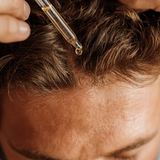
Topical minoxidil is a widely studied hair loss intervention. It works by widening scalp blood vessels and extending the anagen phase, keeping more follicles in the growth cycle.
- side effects: Itching, scalp irritation, and potential initial shedding in first ~12 weeks (a sign the cycle is resetting)
- timeline: It usually takes 6-12 months to see hair regrowth.
- note: Stopping topical minoxidil typically leads to reversal of gains within 3-4 months.
- availability: Topical minoxidil is broadly available at study-level doses without a prescription.
- Bryan's protocol: Bryan uses a custom topical formulation that contains minoxidil.
2. Oral minoxidil
Low doses of oral minoxidil (<5 mg daily) can treat hair loss.
Note: it's not FDA-approved for this use. It's approved as a blood pressure medication, but is often prescribed off-label to regrow hair.
In a double-blind, placebo-controlled RCT of 90 men with androgenetic alopecia, oral minoxidil at 5 mg daily produced similar results to topical minoxidil (5% solution, applied twice daily) after 24 weeks.
- side effects: Hypertrichosis (unwanted body hair growth), headaches, and in rare cases fluid retention
- timeline: Typically 2-4 months for initial changes
- availability: Oral minoxidil requires a prescription. As an off-label use, it can only be prescribed for hair regrowth at a provider's discretion. It is not available through Blueprint… yet.
- Bryan's protocol: Bryan takes oral minoxidil daily.
3. Low-level laser light therapy (LLLT)
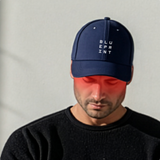
LLLT is an FDA-cleared technology that delivers low-level red laser light directly to the scalp. Wavelengths of 650 nm have been shown to increase hair follicle blood flow and cellular metabolism, extend the anagen phase, and promote visibly thicker hair with pattern hair loss.
- side effects: Minimal. Some users report scalp warmth during early use.
- timeline: Visible results in ~4 months with consistent daily use.
- availability: The Blueprint 302 Laser Cap has 302 individual laser diodes (not LEDs), and is designed to regrow hair in 16 weeks with 6 min of daily use.
- note: Laser diodes and LEDs are not the same. Many "red light" devices use LEDs only, or a combination of LEDs and lasers. Studies show that laser therapy is more successful at stimulating hair growth than LEDs and lasers combined.
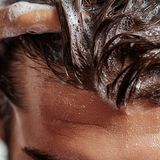
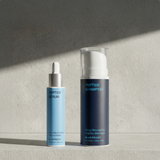
- Bryan's protocol: Bryan wears the 302 Laser Cap for 6 min a day, after using Peptide Shampoo and Peptide Hair Serum.
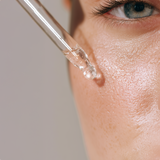
4. Biomimetic peptide serums
Peptides like sh-Polypeptide-86, sh-Polypeptide-59, and copper tripeptide-1 support the appearance of stronger, healthier-looking hair.
Effective delivery depends on a formulation that can actually penetrate the scalp barrier.
- side effects: Minimal. Scalp sensitivity possible.
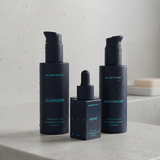
- availability: There are a growing number of peptide hair serums on the market. Look for one with a nanoliposome delivery system to deliver ingredients to the scalp and follicles. The Blueprint Peptide Hair Serum has 8 advanced peptides with a nanoliposome delivery system.
- Bryan's protocol: Bryan uses the Peptide Hair Serum on a dry scalp, after the shampoo and before the laser cap.
5. DHT blockers: finasteride and dutasteride
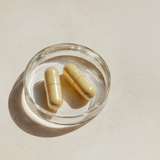
Finasteride and dutasteride block an enzyme called 5-alpha reductase, reducing DHT at the follicle level. Both medications are only available on prescription.
Bryan does not currently include either medication in his protocol due to side effects. A small percentage of users report sexual dysfunction. The risk-benefit calculation is a personal one that should involve a physician.
What to look for
Whether you buy from Blueprint or elsewhere:
- start early: Intervene before loss is visible. Many people wait too long. It may be easier to prevent hair loss than to regrow hair, though hair regrowth is possible.
- layer mechanisms: Minoxidil and LLLT target different pathways.
- for laser devices: Confirm laser diodes (not LEDs), wavelength between 630-670 nm, and full scalp coverage including hairline, temples, and crown.
- for serums: Look for a delivery system designed to cross the skin barrier, not just a list of ingredients.
- be consistent: Every intervention requires consistent use. Gaps reset progress.
This content is for educational purposes only and is not intended as medical advice. You should consult a qualified healthcare provider before starting any treatment or making changes to your health regimen.


