












PFAS: What Are They and How to Avoid Them
Written by Vanessa Gibbs • 07.27.2026
Bryan recently found forever chemicals (PFAS) in the artificial turf in his backyard.
PFAS are everywhere.
Skincare. Clothing. Cookware. Packaging. 97% of us have them in our blood.
They may disrupt metabolism, lower fertility, and increase cancer risk.
In this blog post:
- what are PFAS
- where are they found
- how to avoid them
What are PFAS?
PFAS (perfluoroalkyl and polyfluoroalkyl substances) are a group of nearly 15,000 synthetic chemicals. They're used to make products non-stick and water-, stain-, and grease-resistant.
They break down extremely slowly, with some PFAS lasting thousands of years in the environment. Hence the nickname "forever chemicals."
PFAS can get into your blood, organs, and brain, and they're toxic at extremely low levels.
Exposure to PFAS has been linked to:
- developmental issues in children
- weakened immune system
- increased cholesterol levels
- obesity
- hormone disruption
- decreased fertility
- liver damage
- kidney, testicular, prostate, thyroid, and breast cancer
This might not be everything. We're still learning how some PFAS affect human health.
Where are PFAS found?
PFAS can get into the soil, water, and air, and enter the food supply. You can be exposed to them by drinking water or eating food that's been contaminated with PFAS.
You can also find PFAS in:
- non-stick cooking pans
- food packaging, including fast food wrappers, pizza boxes, microwave popcorn bags, and grease-resistant paper (some PFAS packaging is being phased out in the U.S.)
- clothing, especially if it's water-resistant, stain-repellent, or dirt-repellent
- cosmetics, including skincare, haircare, make-up, and dental floss
- homeware, like furniture, bedding, and textiles if they're water- or stain-repellent
How to avoid PFAS exposure
Start here:
- use stainless steel, cast iron, or ceramic pans. Avoid traditional PTFE (polytetrafluoroethylene) non-stick pans.
- don't heat up food wrapped in plastic or grease-resistant packaging.
- check stain- or water-repellent clothing or homeware: Some brands are PFAS-free.
- test your drinking water: Use filters if PFAS are high. Reverse osmosis systems and granular activated carbon can remove PFAS from water. (Boiling water doesn't remove PFAS and can actually increase the concentration.)
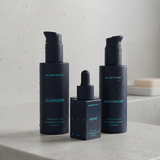
- check cosmetic labels: Avoid waterproof and long-lasting formulas, and ingredients like PTFE, perfluorononyl dimethicone, and trifluoroacetyl tripeptide-2. Blueprint skincare and haircare products are not formulated with added PFAS.
- eat more fiber: Fiber may help your body trap and excrete more PFAS. Get fiber from fruits, veggies, legumes, and whole grains. Metabolic Protein has 8 grams of fiber if you need an easy way to increase your intake.
You can't always avoid PFAS in food or water… but there's a lot you can do to reduce your exposure from everyday products.


